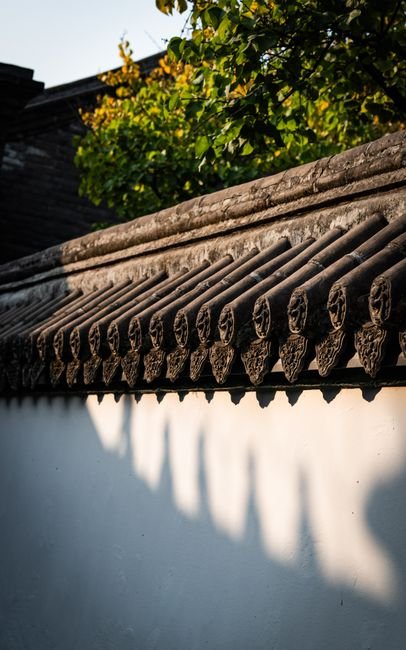
The three great carving arts that transform structural elements into works of sculpture.
The three carving arts (三雕, san diao) — wood carving (木雕), brick carving (砖雕), and stone carving (石雕) — are the primary decorative arts of traditional Chinese architecture. These crafts transform structural and functional elements into works of sculpture, adorning buildings with intricate patterns, figures, and scenes that convey cultural values, social status, and aesthetic refinement. The three carving arts are found throughout China, with each region developing its own distinctive styles and specialties.
Wood Carving (木雕)
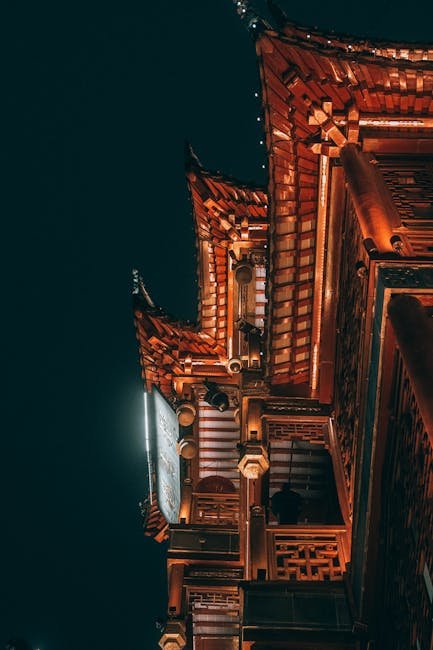
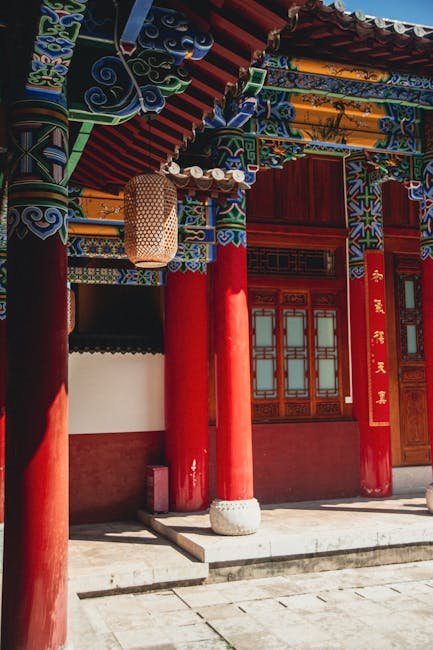
Wood carving is the most visible and widely practiced of the three carving arts. In traditional Chinese architecture, wood carving is found on beams, brackets, door panels, window lattices, screens, and furniture. The carving techniques include relief carving (浮雕, fu diao), in which the design projects from the background; openwork carving (透雕, tou diao), in which the background is cut away entirely; and three-dimensional carving (圆雕, yuan diao), in which the carving is fully dimensional and viewable from all sides.
The subject matter of Chinese wood carving draws from a rich repertoire of symbols and stories. Auspicious motifs include dragons, phoenixes, lions, and qilin (mythical hooved creatures). Natural motifs include the "Four Gentlemen" — plum blossom, orchid, bamboo, and chrysanthemum — representing the four seasons and the virtues of the scholar-gentleman. Narrative scenes from Chinese opera, classical literature, and historical events are carved on panels and screens, turning the building into a visual encyclopedia of Chinese culture.
"Chinese architectural carving is not merely decorative — it is a language. Every motif carries meaning, every pattern tells a story, and every composition reflects the values of the household. A carved beam is a book to be read, and the carver is a scribe rendering Confucian virtues, Daoist harmony, and Buddhist compassion in wood and stone."
Brick Carving (砖雕)
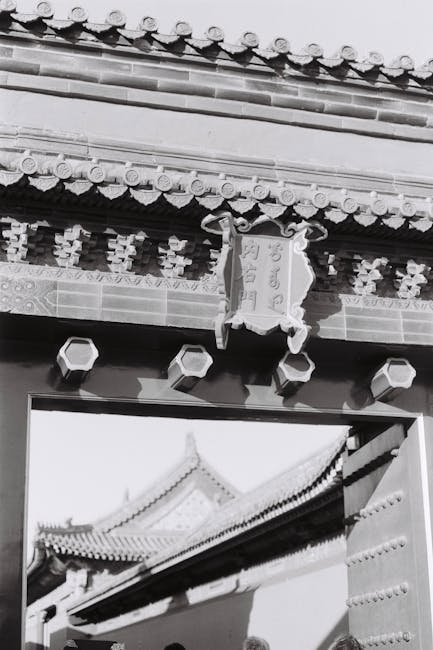
Brick carving is a specialized craft that reached its highest development in the Huizhou region of Anhui province and the Shanxi province. The technique involves carving designs into specially prepared bricks — typically made from fine-grained clay that is fired to a precise hardness that allows carving without crumbling. Brick carvings are used on gateways, screen walls, wall panels, and roof ridges, where they provide durable decoration that withstands weather better than wood.
Huizhou brick carving is particularly renowned for its delicacy and detail. The carvers of Anhui developed a distinctive style characterized by multiple layers of relief, creating a sense of depth and perspective within the shallow plane of the brick surface. Typical subjects include garden scenes with figures, pavilions, and trees, rendered with extraordinary precision. The most elaborate brick carvings may contain dozens of figures in a single panel, each carefully carved and positioned to create a coherent scene.
Stone Carving (石雕)
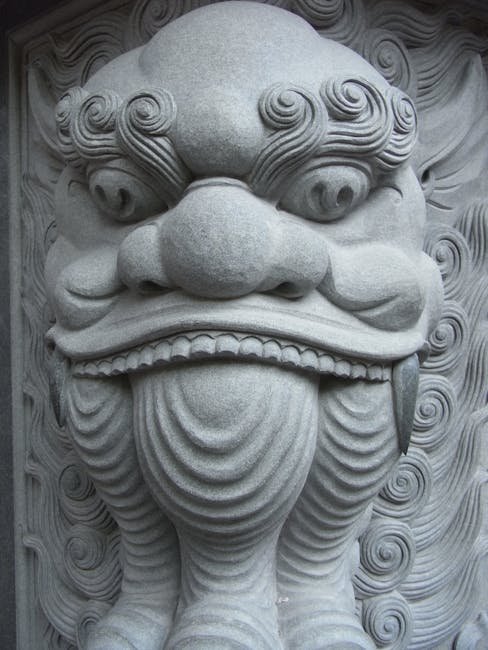
Stone carving is the most durable of the three carving arts, used for structural elements that require strength and weather resistance. Stone carvings are found on column bases, balustrades, stairways, bridges, and memorial arches. The stone used varies by region — granite in Fujian, limestone in Anhui, sandstone in Sichuan — with each stone type requiring different carving techniques and producing different aesthetic effects.
The most celebrated stone carving tradition is found in Fujian, particularly in the Hui'an county, which has been a center of stone carving for over a thousand years. Hui'an stone carvers are famous for their ability to render soft, flowing forms in hard granite — dragons coiling around columns, lions guarding entrances, and lotus petals adorning column bases. The stone carving tradition continues today, with Hui'an carvers producing work for buildings throughout China and around the world. The survival of these ancient crafts into the modern era testifies to the enduring value of traditional Chinese architectural decoration.