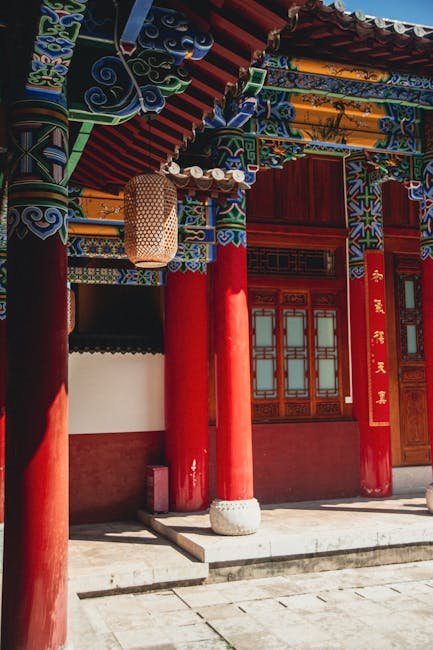
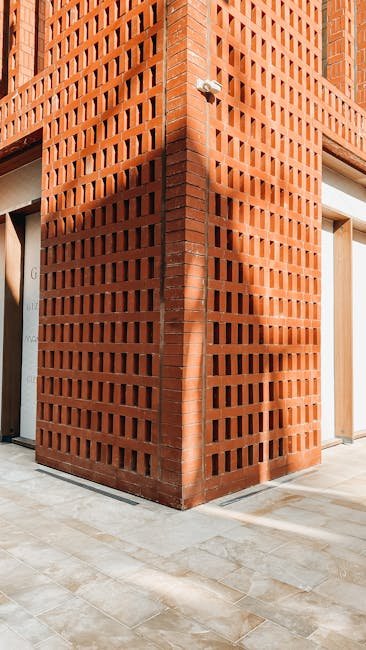
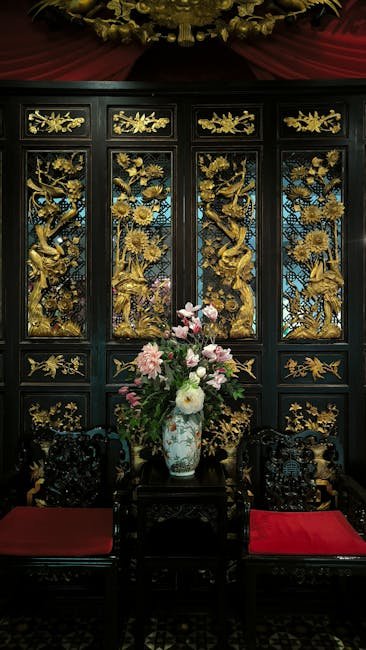
Decorative screens that transform windows into works of art, filtering light and framing garden views.
Chinese window lattices (花窗, hua chuang, or 漏窗, lou chuang) are among the most exquisite decorative elements in traditional Chinese architecture. These intricately carved wooden screens fill window openings, door panels, and partition walls, transforming functional openings into works of art. Window lattices serve to filter light, provide ventilation, create privacy, and frame views of gardens and courtyards. The patterns created by the lattice work range from simple geometric grids to elaborate compositions of flowers, birds, and auspicious symbols.
Craftsmanship and Materials
Traditional Chinese window lattices are crafted from wood, typically using hardwoods such as rosewood, mahogany, or nanmu that are durable and capable of holding fine detail. The lattice work is assembled using mortise-and-tenon joints, without nails or glue, a technique that requires exceptional precision and skill. The individual lattice pieces are cut from thin wooden strips, shaped, and fitted together to create the desired pattern. In the finest examples, the lattice work is augmented with carved panels depicting scenes from mythology, literature, or daily life.
The region of production influences the style of lattice work. Suzhou and the Jiangnan region are famous for their refined, delicate lattices featuring intricate geometric patterns and garden-related motifs. Lattices from Shanxi and the north tend to be more robust and simpler in design, reflecting the colder climate and the region's pragmatic building traditions. Lattices from Fujian and Guangdong are often more richly carved, with deeper relief and more complex compositions that reflect the region's prosperous merchant culture.
"The Chinese window lattice transforms the ordinary act of looking out a window into an aesthetic experience. The lattice creates a screen through which the outside world is filtered, fragmented, and recomposed into patterns of extraordinary beauty. Light passing through the lattice becomes a pattern on the floor, moving and changing through the day like a sundial made of shadows."
Symbolic Patterns
The patterns used in Chinese window lattices are rich with symbolic meaning. Geometric patterns such as the "ice crack" (冰裂纹, bing lie wen) pattern — resembling cracked ice — symbolize the arrival of spring and the breaking of winter's hold. The "cash" (钱纹, qian wen) pattern, using overlapping circles representing ancient Chinese coins, symbolizes wealth and prosperity. The "ruyi" (如意) pattern, based on the shape of the ceremonial scepter, symbolizes the fulfillment of wishes.
Figurative patterns depict auspicious animals and plants. Bats (蝠, fu) represent good fortune, as the word is a homophone for "blessing." Cranes and pine trees represent longevity. Fish (鱼, yu) represent abundance, as the word sounds like "surplus." The peony (牡丹, mu dan) represents wealth and honor, while the plum blossom (梅花, mei hua) represents perseverance and hope. These motifs are combined in endless variations, creating a visual language that was understood by all who saw it.
Functional Design
Beyond their decorative function, Chinese window lattices are carefully designed to control light, air, and views. The density of the lattice can be adjusted to suit the orientation of the window — south-facing windows may have more open lattices to admit winter sun, while west-facing windows may have denser lattices to reduce afternoon heat gain. In gardens, "leaky windows" (漏窗) with open lattice work allow views through to the garden beyond while framing the view like a painting.
The lattice also provides a practical function in the Chinese context. In an architecture that traditionally used paper rather than glass for window covering, the lattice provided the structural support for the paper while allowing light to filter through. The paper diffused the light softly, creating the warm, ambient interior lighting that characterizes traditional Chinese interiors. Today, while glass has replaced paper, the lattice tradition continues, with modern interpretations using metal, glass, and composite materials alongside traditional wood.