Chinese interior design is a rich and varied tradition that spans thousands of years, encompassing the opulent interiors of imperial palaces, the scholarly refinement of literati studios, the commercial vigor of merchant houses, and the contemporary minimalism of modern apartments. While often associated with red lacquer, gold leaf, and elaborate carvings, Chinese interior design is far more diverse than these stereotypes suggest. This section explores the major styles, elements, and traditions of Chinese interior design, from classical to contemporary.
The Philosophy of Chinese Interiors
Chinese interior design is grounded in principles that differ fundamentally from Western approaches. The concept of "empty space" (空, kong) is valued as highly as the objects that occupy it — a room should not be filled with furniture but rather should have breathing space that allows qi to circulate. Symmetry and balance are important, but strict symmetry is often reserved for formal spaces such as ancestral halls and reception rooms, while private spaces may be more informal and asymmetrical. The relationship between indoor and outdoor space is carefully managed through the placement of windows, doors, and screens that frame views of gardens or courtyards.
Feng shui principles also govern interior layout. The placement of furniture, the use of colors, and the arrangement of decorative objects are all subject to feng shui considerations. The bed should be positioned to allow a view of the door without being directly in line with it. The stove should face an auspicious direction. Mirrors should be placed to reflect positive energy and deflect negative. These principles, while sometimes dismissed as superstition, often encode practical wisdom about spatial psychology and environmental comfort.
"Chinese interior design is not about filling space but about shaping it. The empty wall is as important as the painting that hangs on it; the silence between notes is as meaningful as the notes themselves. A Chinese interior is a composition of voids and solids, light and shadow, texture and color, arranged to create harmony and evoke emotion."
Styles and Topics
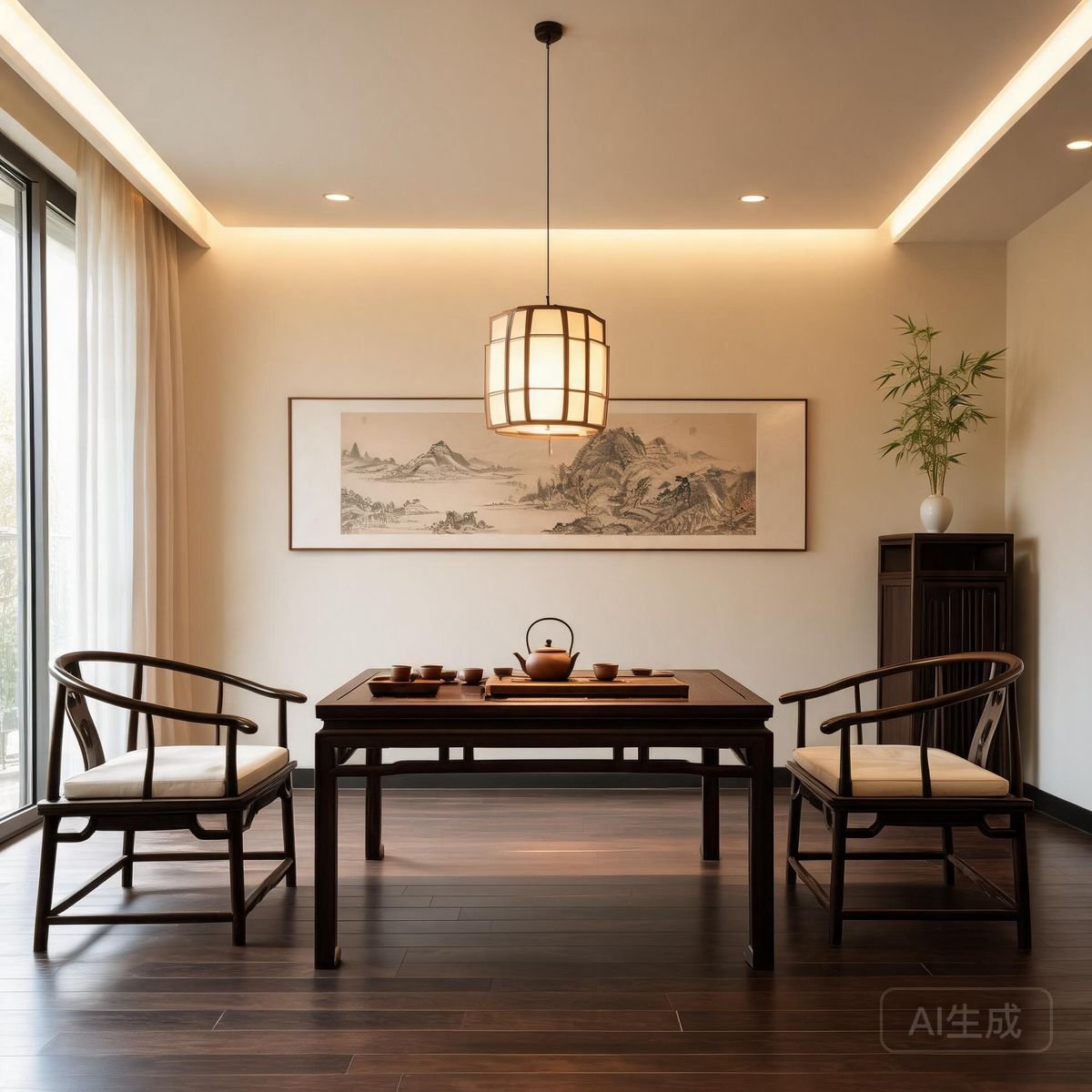
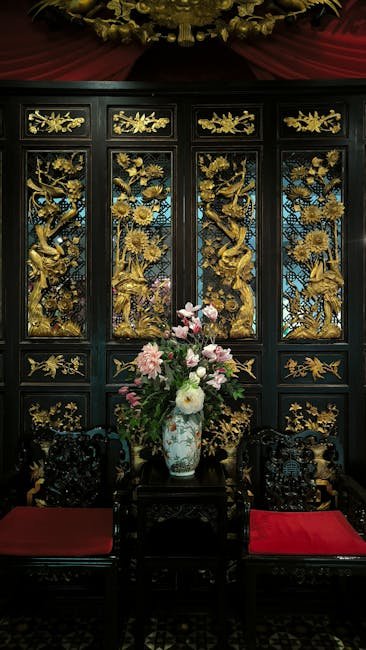
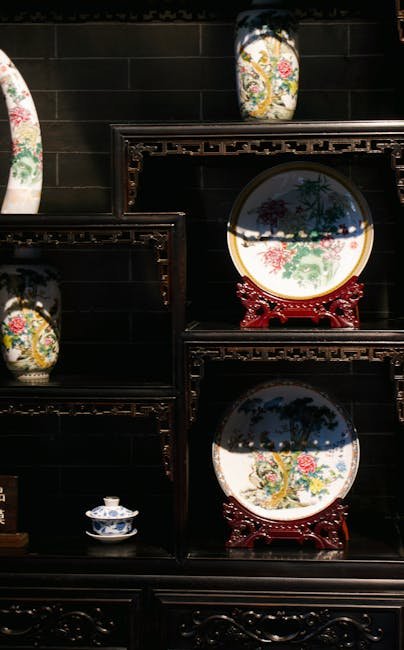
This section covers the following aspects of Chinese interior design: New Chinese Style (新中式), the contemporary reinterpretation of traditional Chinese design for modern living; Classical Chinese Interiors (古典中式), featuring redwood furniture, folding screens, and display cabinets; Ming and Qing Furniture (明清家具), the masterpieces of Chinese furniture design; Tea Room Design (茶室设计), the art of creating spaces for tea ceremony; Chinese Color Palette (中式配色), the traditional color system based on the five elements; and Silk and Brocade Decor (丝绸/织锦软装), the use of luxurious textiles in Chinese interior decoration.
Each topic examines the historical background, design principles, characteristic elements, and contemporary applications of these interior traditions. Whether you are designing a home, studying design history, or simply appreciating the beauty of Chinese interiors, this section provides a comprehensive overview.
The Chinese Interior as Cultural Expression
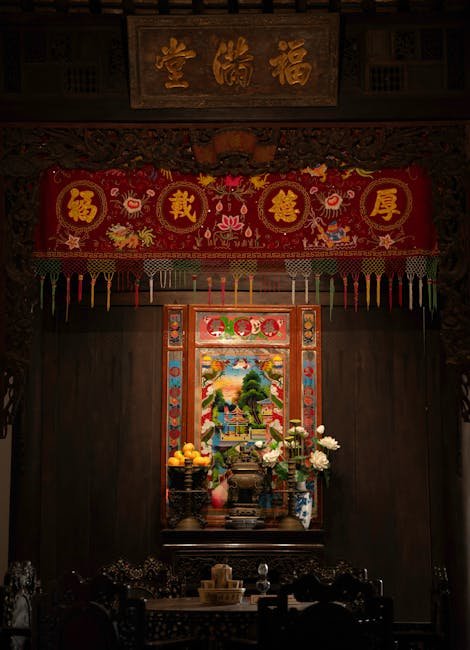
Chinese interior design is inseparable from Chinese philosophy, social structure, and aesthetic sensibility. The arrangement of furniture within a room reflects Confucian hierarchy — the position of the host and honored guest, the placement of the ancestral altar, the orientation of the marriage bed. The color palette derives from the Five Elements (五行, wuxing) cosmology, with specific colors associated with directions, seasons, and materials. The preference for natural materials — wood, stone, silk, paper, bamboo — reflects Daoist values of harmony with nature and the aesthetic principle of ziran (自然), or naturalness. Understanding Chinese interiors requires understanding the cultural values that they embody, from the scholar's studio as a retreat for contemplation to the family altar as the spiritual center of the home.
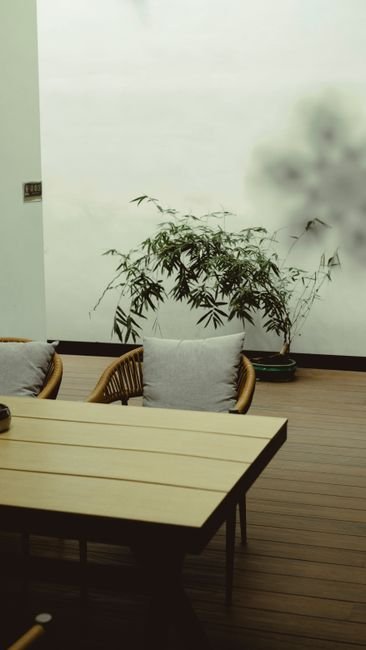
Contemporary Chinese interior design navigates between two poles: the faithful reproduction of classical interiors for heritage buildings and museums, and the "New Chinese Style" (新中式, xin zhong shi) that reinterprets traditional elements for modern living. The most successful contemporary Chinese interiors achieve a synthesis that feels neither nostalgic nor rootless — spaces that would be at home in a Shanghai penthouse or a Beijing courtyard renovation, drawing on traditional Chinese spatial sensibility while embracing the openness, comfort, and technology that contemporary life demands. This creative tension between tradition and modernity is one of the most dynamic areas of contemporary Chinese design practice.
Materials and Craftsmanship
The rich material palette of Chinese interiors reflects China's vast geography and long history of craft production. Hardwoods such as huanghuali (黄花梨) and zitan (紫檀) from Hainan and Southeast Asia were prized for furniture in the Ming dynasty. Jingdezhen porcelain, produced since the Song dynasty, provided vessels and decorative objects for scholar's studios. Suzhou embroidery, Nanjing brocade, and Sichuan silk contributed textiles of extraordinary refinement. Lacquerware from Fujian, bamboo carving from Jiangsu, and stone carving from Hebei added layers of texture and craftsmanship. Understanding Chinese interiors involves understanding this material culture and the regional craft traditions that produced it — traditions that in many cases continue today, supported by a growing appreciation for handcrafted quality in an age of mass production.
Contemporary Chinese interior design draws increasingly on this craft heritage, commissioning custom furniture from traditional workshops, incorporating antique textiles into modern interiors, and using traditional materials in innovative ways. This craft-driven approach distinguishes the best Chinese interior design from generic global modernism, creating spaces that feel rooted in place and culture rather than interchangeable with interiors anywhere in the world. The articles in this section explore both the historical traditions and their contemporary applications, providing a comprehensive resource for anyone interested in the art of Chinese interior design.
Seasonal and Ritual Dimensions
Traditional Chinese interiors were not static — they changed with the seasons, with ritual occasions, and with the life cycle of the household. Summer brought bamboo blinds, rush mats, and lightweight silk cushions to the fore; winter called for heavy brocade hangings, fur rugs, and charcoal braziers. Festival decorations — red paper cuts for Lunar New Year, lanterns for the Mid-Autumn Festival, chrysanthemums for the Double Ninth Festival — transformed the interior throughout the year. The interior also responded to life events: weddings, funerals, the birth of children, and the celebration of elders' birthdays each brought specific ritual objects and spatial arrangements. This temporal dimension of the interior, its responsiveness to the cycles of nature and human life, is an important aspect of the Chinese interior tradition that contemporary design often overlooks but that offers rich possibilities for creating spaces that feel alive and connected to time.