An innovative housing typology that brings villa-style multi-story living to the apartment format.
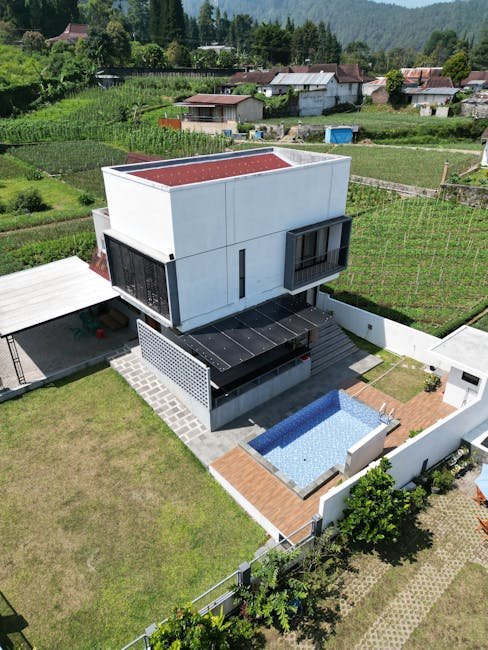
Stacked villas (叠墅, die shu) represent one of the most innovative recent developments in Chinese residential architecture. This typology stacks two or three villa-like units vertically within a single building, giving each unit its own multi-story interior layout, private entrance, and outdoor space. The result combines the spatial advantages of villa living — multi-level floor plans, separation of public and private zones, and direct access to outdoor space — with the land efficiency of apartment buildings.
The Concept and Its Origins
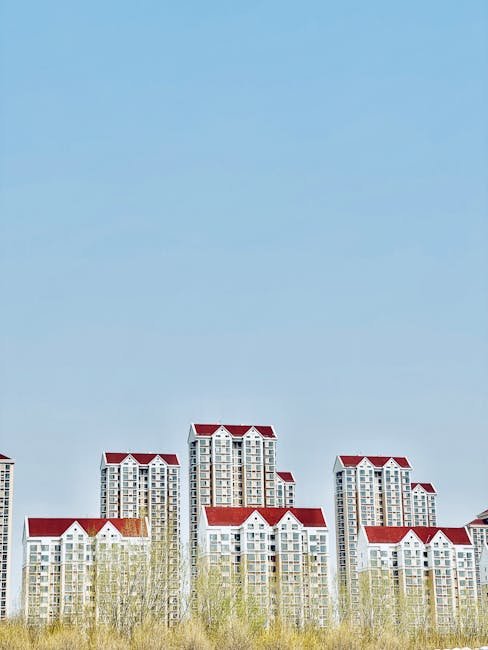
The stacked villa concept emerged in China during the 2000s as developers sought ways to provide villa-like living experiences within the constraints of increasingly strict land-use regulations. As cities imposed limits on low-density suburban sprawl, the traditional villa and townhouse formats became harder to approve. Stacked villas offered a solution, achieving higher density while maintaining the multi-story living experience that Chinese homebuyers valued.
The typical stacked villa building contains two to three units, each occupying two to three floors. The ground-floor unit has its own entrance from the garden and includes a basement level. The middle and top-floor units are accessed by a staircase or elevator that serves only that unit, creating the sense of individual ownership that distinguishes stacked villas from conventional apartments. Each unit has its own outdoor space — a garden for the ground-floor unit, a terrace for the middle unit, and a roof terrace for the top unit.
"Stacked villas are a brilliant Chinese innovation in residential design. They solve the fundamental challenge of providing ground-floor, multi-story living experiences in an increasingly dense urban environment. When well-designed, they offer the spatial qualities of a villa with the land efficiency of an apartment building."
Design Features
The key design feature of stacked villas is the organization of living spaces vertically across multiple floors within a single unit. This vertical separation allows for a clear division between public and private zones, with living and dining areas on one level and bedrooms on another. The multi-story layout also creates opportunities for dramatic double-height spaces, internal staircases, and visual connections between floors that are impossible in single-level apartments.
Outdoor space is integrated at every level. Ground-floor units have private gardens, often extending the living space outdoors through large sliding glass doors. Upper-level units have generous terraces or roof gardens that provide outdoor living areas with views. These outdoor spaces are designed as integral parts of the living environment, not afterthoughts, with the same attention to design and finish as the interior spaces. The vertical stacking of outdoor spaces creates a green facade that benefits the entire building and neighborhood.
Market Position and Appeal
Stacked villas occupy a premium position in the Chinese housing market, typically priced between conventional apartments and townhouses. They appeal to buyers who value the spatial experience of multi-story living but cannot afford a villa or townhouse, or who prefer the security and convenience of a managed apartment building. The typology is particularly popular with young professionals and small families who appreciate the contemporary aesthetic and efficient use of space that stacked villas typically offer.
As Chinese cities continue to densify and land becomes increasingly scarce, the stacked villa typology is likely to become more common. Architects are exploring ways to adapt the concept to different cultural contexts and regulatory environments, and the basic principles of vertical living — multi-story units with individual outdoor space — are being applied to a widening range of building types. For anyone interested in the future of Chinese residential design, the stacked villa is a development worth watching.