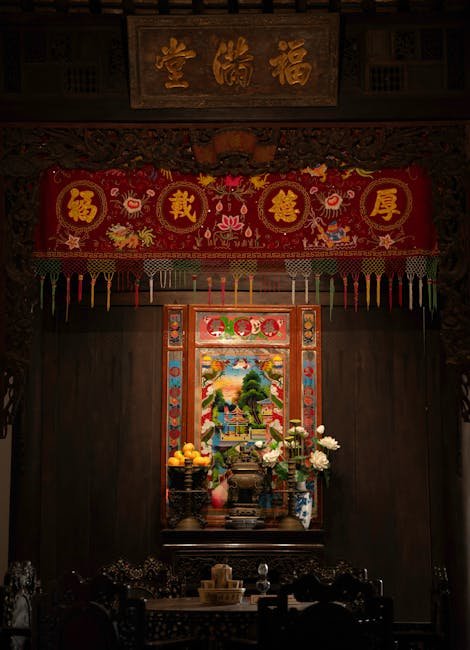
Silk (丝绸, si chou) is one of China's most celebrated cultural achievements, a textile tradition that spans over five thousand years. In Chinese interior design, silk and brocade (织锦, zhi jin) have been used for centuries as wall coverings, window treatments, upholstery, cushions, and decorative hangings, adding color, texture, and luxury to interior spaces. The use of silk in interiors was historically regulated by sumptuary laws, with certain colors and patterns reserved for the imperial family and the highest-ranking officials.
The History of Chinese Silk
According to Chinese tradition, silk cultivation (sericulture) was discovered by the Empress Leizu around 2700 BCE. For thousands of years, the technology of silk production was a closely guarded state secret, giving China a monopoly on this luxurious fabric that fueled the Silk Road trade networks connecting China with Central Asia, the Middle East, and Europe. Silk's value was such that it was used as currency and as tribute to foreign powers, and the desire for Chinese silk drove exploration and trade across Eurasia.
The interior use of silk developed alongside the textile industry itself. During the Han dynasty (206 BCE-220 CE), silk was used for wall hangings, curtains, and floor coverings in the homes of the wealthy. The Tang dynasty (618-907 CE) saw explosive growth in silk production and variety, with new weave techniques, dyes, and patterns creating an unprecedented range of fabrics. The Song dynasty (960-1279 CE) perfected the art of silk tapestry (缂丝, ke si), a technique that allowed weavers to create pictorial designs of extraordinary complexity.
Brocade (织锦, zhi jin) is a richly decorative woven fabric in which patterns are created by additional warp or weft threads that are woven into the fabric, creating a raised, textured effect. The most famous Chinese brocades are from Sichuan (蜀锦, Shu jin), Jiangsu (云锦, Yun jin), and Suzhou (宋锦, Song jin), each with its own distinctive patterns and techniques. Brocade was used for the most luxurious interior applications — throne covers, altar cloths, and the robes of emperors and high officials.
"Chinese silk is not merely a fabric — it is a painting, a poem, and a prayer woven from thread. In interior decoration, silk brings not only beauty but meaning; the patterns woven into brocade carry the same auspicious symbolism as the carvings on a beam or the paintings on a scroll. Every fold of silk tells a story."