The art of creating harmonious microcosms of nature within the built environment.
The Chinese garden is one of the world's great artistic traditions, a three-dimensional art form that combines architecture, landscape design, painting, poetry, and philosophy into a unified whole. Unlike Western gardens, which often emphasize formal symmetry and control over nature, Chinese gardens seek to create a miniature version of the natural landscape, evoking the wild beauty of mountains, rivers, and forests in a confined urban space. The garden is not merely a place of beauty but a setting for contemplation, artistic creation, and social interaction.
Philosophical Foundations
Chinese garden design is grounded in Daoist and Confucian philosophy. The Daoist concept of "naturalness" (自然, ziran) encourages designs that appear effortless and unforced, as if the garden grew organically rather than being artificially constructed. The principle of "borrowed scenery" (借景, jie jing) brings distant mountains, pagodas, or trees into the garden's visual field, dissolving the boundary between the garden and the wider landscape. The Confucian emphasis on cultivation and refinement is expressed in the garden's literary associations — pavilions and rocks are inscribed with poems, and plantings evoke classical allusions.
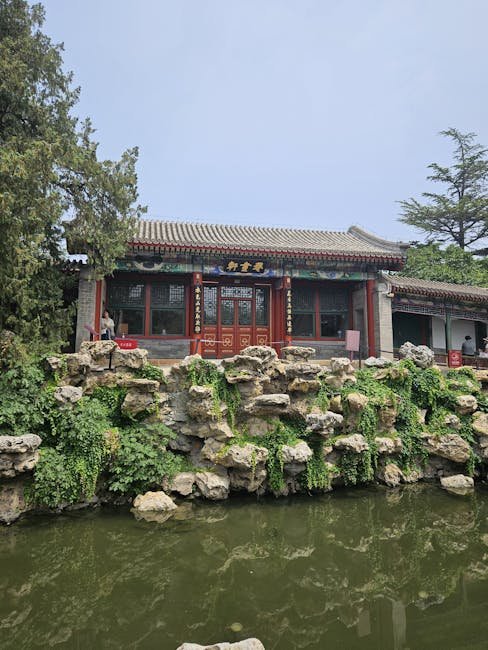
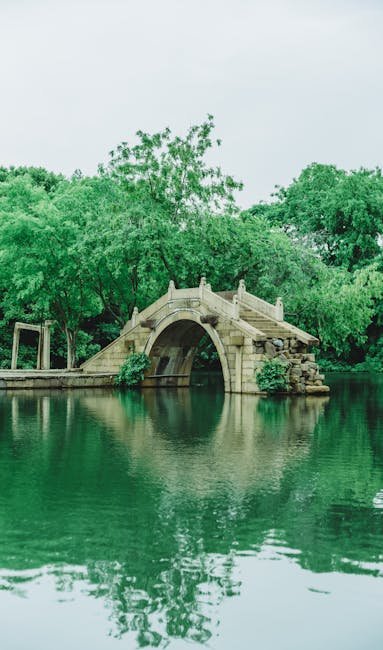
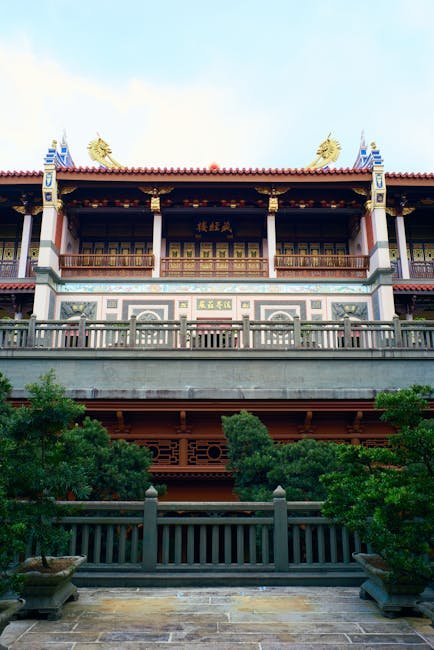
The four essential elements of the Chinese garden are rocks, water, plants, and architecture. Rocks — particularly the fantastically weathered Taihu limestone (太湖石) from Lake Tai — are the "bones" of the garden, creating vertical accents and sculptural forms. Water is the "blood," providing reflection, movement, and sound. Plants — bamboo, pine, plum, orchid, and lotus — are chosen for their symbolic meanings as well as their visual qualities. Architecture — pavilions, corridors, bridges, and pavilions — frames views and provides spaces for contemplation.
"A Chinese garden is a landscape painting made three-dimensional. Every rock is a mountain in miniature, every pool an ocean, every tree a forest. The garden designer creates not a copy of nature but an essence of nature, distilled and concentrated within a walled enclosure. To walk through a Chinese garden is to walk through a poem."
Garden Design Principles
Chinese garden designers employ a sophisticated set of design principles to create the experience of natural landscape within a confined space. "Contrast and complement" (对比与衬托) uses juxtapositions of light and shadow, rough and smooth, open and enclosed to create visual interest. "Winding and indirection" (曲折与含蓄) ensures that views unfold gradually, with pavilions and plants placed to conceal as well as reveal, creating a sense of depth and mystery. The path through a Chinese garden is never straight — it curves and doubles back, delaying arrival and prolonging the visitor's engagement with the landscape.
The "Four Seasons" principle ensures that the garden offers interest throughout the year. Spring brings plum blossoms and peach flowers, summer offers lotus blooms on the pond, autumn delights with chrysanthemums and maple leaves, and winter reveals the austere beauty of bamboo and pine against bare rock and snow. Evergreen plants provide structure year-round, while deciduous trees and seasonal flowers create a constantly changing tapestry of color and form. A well-designed Chinese garden is never the same from one visit to the next.
Famous Gardens
China's most celebrated gardens are concentrated in Suzhou, where the Humble Administrator's Garden, the Lingering Garden, the Master-of-Nets Garden, and the Mountain Villa with Embracing Beauty represent the pinnacle of the art. These gardens were built by retired officials and scholars during the Ming and Qing dynasties, using their wealth to create private paradises that expressed their cultural refinement and provided settings for literary and artistic pursuits. Each garden has its own character — the Humble Administrator's Garden is expansive and watery, the Master-of-Nets Garden is intimate and refined, the Lingering Garden is famous for its extraordinary Taihu rockeries.
Beyond Suzhou, notable gardens include the Summer Palace in Beijing, which combines imperial grandeur with garden artistry on a vast scale; the Garden of the Unsuccessful Politician in Shanghai; and the Ge Garden in Yangzhou, renowned for its four-season rockery made from four different types of stone. All of these gardens share the fundamental principles of Chinese garden design while expressing the individual vision of their creators and the characteristics of their regions. Together, they constitute an artistic heritage of world significance.